
Ju.com Announcement on the Establishment of a $30 Million AI Special Investment Fund
To seize the global opportunities brought about by the rapid development of artificial intelligence (AI) technology and to further promote the deep integration of cutting-edge technology with the real economy and the digital economy, Ju.com officially announces the establishment of a $30 million AI special investment fund.
This fund will systematically invest around core AI technologies and the next generation of intelligent product forms. Key investment areas include, but are not limited to: • AI foundational models and underlying technologies • AI Agent products and solutions, encompassing autonomous decision-making, task execution, and automation scenarios • Intelligent robotics-related products, including software-driven robots, Embodied AI, and human-robot collaboration systems • Convergent applications of AI and Blockchain / Web3, such as smart contract automation, on-chain governance and risk control, and decentralized intelligent execution systems • Commercialization and implementation of AI in fields like fintech, enterprise services, content generation, and data analytics
This special fund will invite several listed companies and industrial capital to co-invest. By leveraging synergies from industrial resources, application scenarios, and financial support, it aims to provide portfolio projects with full-cycle empowerment, from technology validation and commercial implementation to long-term strategic partnerships.
Ju.com has always adhered to a long-term value and technological innovation-oriented approach, continuously building an open, robust, and sustainable technology investment ecosystem. The establishment of this AI special fund represents a crucial strategic move by Ju.com in the context of cutting-edge technology and the intelligent trend, and also reflects our high recognition of the long-term industrial value of AI, AI Agent, and robotics technologies.
In the future, Ju.com will collaborate with outstanding entrepreneurial teams, technical talent, and industrial partners worldwide to jointly promote the large-scale application and industrial upgrading of the next generation of intelligent products.
This is hereby announced.
#AI #Jucom


JU Blog
2026-01-07 03:12
Ju.com Announcement on the Establishment of a $30 Million AI Special Investment Fund
Disclaimer:Contains third-party content. Not financial advice.
See Terms and Conditions.
To seize the global opportunities brought about by the rapid development of artificial intelligence (AI) technology and to further promote the deep integration of cutting-edge technology with the real economy and the digital economy, Ju.com officially announces the establishment of a $30 million AI special investment fund.
This fund will systematically invest around core AI technologies and the next generation of intelligent product forms. Key investment areas include, but are not limited to: • AI foundational models and underlying technologies • AI Agent products and solutions, encompassing autonomous decision-making, task execution, and automation scenarios • Intelligent robotics-related products, including software-driven robots, Embodied AI, and human-robot collaboration systems • Convergent applications of AI and Blockchain / Web3, such as smart contract automation, on-chain governance and risk control, and decentralized intelligent execution systems • Commercialization and implementation of AI in fields like fintech, enterprise services, content generation, and data analytics
This special fund will invite several listed companies and industrial capital to co-invest. By leveraging synergies from industrial resources, application scenarios, and financial support, it aims to provide portfolio projects with full-cycle empowerment, from technology validation and commercial implementation to long-term strategic partnerships.
Ju.com has always adhered to a long-term value and technological innovation-oriented approach, continuously building an open, robust, and sustainable technology investment ecosystem. The establishment of this AI special fund represents a crucial strategic move by Ju.com in the context of cutting-edge technology and the intelligent trend, and also reflects our high recognition of the long-term industrial value of AI, AI Agent, and robotics technologies.
In the future, Ju.com will collaborate with outstanding entrepreneurial teams, technical talent, and industrial partners worldwide to jointly promote the large-scale application and industrial upgrading of the next generation of intelligent products.
This is hereby announced.
#AI #Jucom
- The crypto industry spent a decade evangelizing decentralization. At the same time, AI companies assembled the most valuable monopolies since Standard Oil, and they’re data monopolies that make protocol dominance look trivial by comparison.
- The AI industry is expected to generate over $300 billion in revenue by 2025, primarily through training models on trillions of tokens scraped from researchers, writers and domain experts.
- Bitcoin maxis fought block size wars. Ethereum debated MEV extraction. Meanwhile, OpenAI, Google and Anthropic scraped the entire corpus of human knowledge, locked it inside proprietary training runs and built moats that no amount of capital or talent can overcome.
- Crypto’s response was launching the ten-thousandth DeFi fork while the most consequential infrastructure battle of the decade happens offchain.
- Crypto needs a wake-up call. It is catastrophically misallocating attention while AI companies perfect centralized control over intelligence itself, the ultimate network effect that makes liquidity pools look like child’s play.
Data set monopolies are permanent without intervention
- DeFi demonstrated that financial infrastructure could be rebuilt transparently. Financial rails, however, are commoditized compared to knowledge monopolies. Every DeFi protocol competes on execution, composability and user experience because the underlying assets like tokens, stablecoins and liquidity are standardized and portable.
- AI data sets are not portable. They’re locked inside training runs that cost $100 million and take months to complete. Once a foundation model reaches critical mass, it becomes prohibitively expensive to replicate. The first mover that assembled the training corpus wins permanently unless new infrastructure changes the rules.
- Google has 20 years of search query data. Meta has 15 years of social interaction data, and OpenAI partnered with publishers who will never license the same content to competitors. These are permanent moats that compound with every new user interaction.
- Crypto built decentralized alternatives to centralized finance, so where is the decentralized alternative to centralized intelligence? It doesn’t exist because crypto hasn’t treated data ownership as an existential fight worth having.
Crypto founders aren’t building data set protocols
- The brutal truth is that data set infrastructure is less exciting than yield farming. Crypto founders chase token velocity, speculative upside and viral growth mechanics. Building attribution layers for training data generates zero speculation, requires years of ecosystem development and demands partnerships with institutions that move slowly.
- Boring infrastructure, however, is precisely what mattered. Ethereum wasn’t exciting when it launched; it was a slow, expensive computer that academics appreciated. Chainlink wasn’t exciting; it was an oracle network that took five years to gain adoption. The most critical crypto infrastructure often resembled homework compared to the casino next door.
- Data set attribution protocols are the homework right now. The market opportunity is larger than DeFi, the network effects are more potent than those of any protocol token, and regulatory pressure creates inevitable demand. Yet crypto capital flows into the next NFT marketplace instead of the infrastructure that could prevent AI companies from becoming more powerful than nation-states.
The window is closing fast
- AI companies are not waiting for permission. They’re training GPT-5, Claude 4 and Gemini Ultra right now using data scraped from millions of creators who will never see compensation. Every training run that completes without onchain attribution makes centralized control more entrenched.
- Once these models reach sufficient capability, they become self-reinforcing. Users generate data through interactions, which train the next version, and the next version attracts more users. The flywheel accelerates, and competitors cannot catch up because they lack both the initial corpus and the ongoing data stream.
- Crypto has maybe two years before this window closes permanently. After that, data set monopolies become facts of nature that no amount of decentralized infrastructure can dislodge.
What crypto should build instead of more DEXs
- The crypto industry needs data set registries where contributors cryptographically sign data licenses before any training begins. It requires attribution protocols that log which data sets influenced which model outputs, and micropayment rails that automatically split inference revenue among the original creators. It needs reputation systems that rank data set quality based on measured model performance, rather than subjective metrics.
- The technology is simpler than most DeFi protocols. Data set registration requires cryptographic hashes, contributor wallet addresses, licensing terms in standardized formats, and usage logs. Training runs record the data used and when it was used — inference requests route payments to registered contributors proportionally.
- This infrastructure doesn’t require new consensus mechanisms or experimental cryptography, but rather builders who prioritize preventing monopolies over farming liquidity rewards.
Crypto’s mission or crypto’s obituary
- Crypto’s founding thesis was preventing centralized control over valuable networks. Bitcoin prevented central banks from monopolizing money. Ethereum prevented tech companies from monopolizing computation. But if AI companies monopolize intelligence, those victories become irrelevant.
- What good is decentralized money if centralized models control what people think? What good is decentralized computation if centralized training data determines which ideas get amplified? Intelligence is upstream of everything, from finance and governance to media and education. Whoever controls AI training data controls the future information environment.
- Crypto can either build the infrastructure that makes data set monopolies impossible, or it can watch AI companies perfect the exact centralized control that blockchain was invented to prevent. There’s no third option where crypto remains focused on token speculation while being relevant to the most significant technological shift of the century.
- The industry needs to build data set attribution infrastructure now, or write crypto’s obituary as the movement that talked about decentralization. In contrast, centralized AI companies built permanent monopolies on human knowledge.
This article is for general information purposes and is not intended to be and should not be taken as legal or investment advice. The views, thoughts, and opinions expressed here are the author’s alone and do not necessarily reflect or represent the views and opinions of Cointelegraph.
#AI #Jucom #CentralizedAI #cryptocurrency #blockchain
JPMorgan analysts said Stripe is positioning itself to lead what they described as “twin revolutions in intelligence and money movement,” forecasting the company could tap into a $350 billion-plus market opportunity by the end of the decade.
The report, published Thursday by analysts Jon Hacunda, Lula Sheena, and Celal Sipahi, highlighted Stripe’s growing role in both AI-powered commerce and digital-asset infrastructure.
The $107 billion fintech firm processes more than $1.4 trillion in payments annually across 195 countries and turned a profit last year, with net revenue climbing 28% year-over-year to about $5.1 billion.
JPMorgan described Stripe as “a beneficiary of borderless financial services” and said its early traction with AI startups gives it a structural advantage as "agentic commerce" scales.
Stripe has also made inroads into the crypto and stablecoin sectors though acquisitions of Bridge, a stablecoin orchestration platform, and Privy, a crypto-wallet provider. The company is also incubating Tempo, a Layer-1 blockchain built for high-throughput payments in partnership with Paradigm.
Stripe CEO Patrick Collison has described Tempo as “the payments-oriented L1, optimized for real-world financial-services applications.” Last week, the network revealed it had raised $500 million at a $5 billion valuation.
JPMorgan said those initiatives put Stripe in a position to benefit as AI agents, stablecoins, and programmable money become integrated into global commerce.
Still, the analysts noted risks tied to enterprise expansion, unbundling, and regulatory exposure, especially around stablecoin oversight in the U.S. and MiCA rules in Europe.
#cryptocurrency #blockchain #Jucom #JPMorgan #AI
In early innings, Elon Musk's Grok, DeepSeek, and Anthropic's Claude Sonnet 4.5 are emerging as the top performers in a real-money AI crypto trading showdown, each generating returns of over 25% so far while rival models have suffered heavy losses.
The "Alpha Arena," a competition that pits prominent large language models against each other in the live cryptocurrency market, saw OpenAI's GPT-5 and Google's Gemini 2.5 Pro with staggering losses of more than 28% during the same period.
Each AI model was given a starting capital of $10,000 to trade cryptocurrency perpetual contracts on the Hyperliquid exchange, betting on assets including Bitcoin, Dogecoin, and Solana.
The stated objective for the models is to maximize their risk-adjusted returns. The rules emphasize autonomy, requiring each AI to independently generate its trading ideas, size and time its trades, and manage its own risk, with all model outputs and corresponding trades made public for transparency.
Season 1 of the contest began October 17 and runs to November 3. Here's the real-time leaderboard.
Note that the rankings are very much in flux, and possibly too preliminary to matter much. Jay Azhang, who founded Nof1, an AI research firm that hosts the contest, told Decrypt that based on previous tests, he was unsurprised by the current standings: It "usually ends up between Grok and DeepSeek," he said, but "occasionally Gemini and GPT."
Notably, GPT-5 was down over the same period by about 29%. According to Nof1, the model adopted a distinctly cautious and risk-averse strategy. Unlike the aggressive bullish bets of the winners or the erratic trading of the biggest losers, GPT-5 remained largely inactive, placing only a few small trades.
This conservative approach effectively took it out of the running for major gains, but also protected it from the significant downturns experienced by some of its rivals, positioning it as a more stable, if unprofitable, participant. Meanwhile, Claude Sonnet was comfortably in third place among the six contenders.
The results could be sending a complex signal to Wall Street, as the two frontrunners represent two vastly different potential futures for artificial intelligence in finance. DeepSeek is reportedly backed by a Chinese quantitative hedge fund, suggesting its success may stem from specialized financial data and expert fine-tuning—an evolutionary step for today's data-driven firms.
By contrast, Grok's strong performance implies that a powerful, general-purpose AI may be capable of successfully navigating markets on its own—a potentially disruptive development for the entire industry.
Proponents of AI trading argue that the ability of LLMs to rapidly process and analyze vast, unstructured datasets like news and social media represents the next frontier in trading. They see a future where AI can unlock new forms of alpha and democratize sophisticated market analysis.
However, the catastrophic losses of models like Gemini highlight the significant risks that make financial institutions wary. A primary concern is the "black box" nature of these systems, where the reasoning behind a trade is often opaque and unexplainable. This lack of transparency is a major hurdle for regulatory compliance and risk management, as establishing trust in a model's decisions is a critical and ongoing effort.
Beyond opacity, there are fundamental concerns about reliability. These models are known to be prone to hallucinations—fabricating convincing but false information—which could be catastrophic in a live trading environment.
Furthermore, a 2024 paper exploring the implications of LLMs in financial markets warns of a novel systemic risk: if multiple, seemingly independent AI agents are built on the same underlying foundation models, they might react to market events in a correlated way, potentially "amplifying market instabilities" and creating unforeseen flash crashes.
The Gemini 2.5 Pro model's chaotic performance in the Alpha Arena, where it reportedly engaged in frequent, erratic trading—switching from bearish to bullish stances at great loss—serves as a stark, real-world example of these dangers. Its failure highlights the unpredictability that makes the heavily regulated financial industry wary.
For now, Wall Street remains in a state of cautious exploration. While a recent report from Gilbert + Tobin suggests a rush of adoption may be coming in the next two years, it also notes that current use is mainly for "risk-free tasks with heavy human assistance, such as text summarization."
#cryptocurrency #blockchain #AI #Jucom
- Pump.fun announced an experimental Mayhem Mode, allowing AI agents to join the trenches for newly launched tokens. The automated bidding is a new step for AI agents and memes, as before, most agents relied on human assistants.
- Pump.fun announced its Mayhem Mode addition as a tool to increase early trading volumes by including AI agents. The meme platform did not explicitly announce Mayhem Mode or the agents to be involved, instead leaving the community to discover the addition in the documents.
- The AI agent will not create new tokens, unlike previous experiments for agent-generated memes.
The trading agent wallet, however, was already known, potentially sending signals and boosting copy-trading. The AI personality also owns the Agent Pumpy Solana vanity address.
‘Mayhem Mode aims to increase the number of good projects in the pump.fun ecosystem by making coin projects more appealing to engage in at early stages where they typically might fail,’ explained Pump.fun in its documentation.
- The agent, presumably called BUPA, owned only its own native BUPA token and additional Mayhem tokens. The agent started its activity on November 12, with just a few hours of trading before the community discovered the activity.
- For now, the AI agent has no significant trades, but may join a token with random transactions. The increased volumes due to AI activity will happen during the first 24 hours after a token launch.
- Pump.fun has posted a disclaimer that Mayhem Mode does not add economic value to a token or represent any promise of future performance.
AI agent on Pump.fun will mint additional supply
- Token creators on Pump.fun must select Mayhem Mode before launching their token. The model will not be deployed for already existing tokens on the Pump.fun bonding curve, or graduated tokens.
- The AI agent will mint an additional 1B tokens to each meme supply, bringing the total to 2B. After that, the AI agent will use the tokens to trade randomly. The experimental feature may make the initial trading even riskier and more volatile. The agent will buy and sell the token with a random selection of actions.
- At the end of the 24-hour period, the AI agent will burn all unsold tokens. Any tokens sent to the AI agent wallet during the initial Mayhem Mode period will be burned, and cannot affect the decision on buying or selling.
- The AI agent can randomly sell more tokens, thus depleting the bonding curve and preventing human traders from selling.
- Given the prevalence of sniping bots, the AI agent may not always compete against humans, but against simpler trading bots.
Pump.fun trenches slow down
- Pump.fun activity is having another slow period, with lower new token creations and fewer graduations. Daily token creation is down to 12K to 15K. Daily active addresses are down to around 31K, from a peak of over 200K about a year ago.
- Under 4,000 wallets are launching new tokens, declining after the initial hype of the creator reward program. Fewer tokens achieve higher valuations.
Pump.fun continues to buy back PUMP, stabilizing the token around $0.004. For now, Pump.fun and PumpSwap achieve $2.8M in daily fees, enough to buy back some of the PUMP token supply.
#Pumpfun #AI #MemeCoins #Jucom #Cryptocurrency $JU/USDT $SOL/USDT $PUMP/USDT
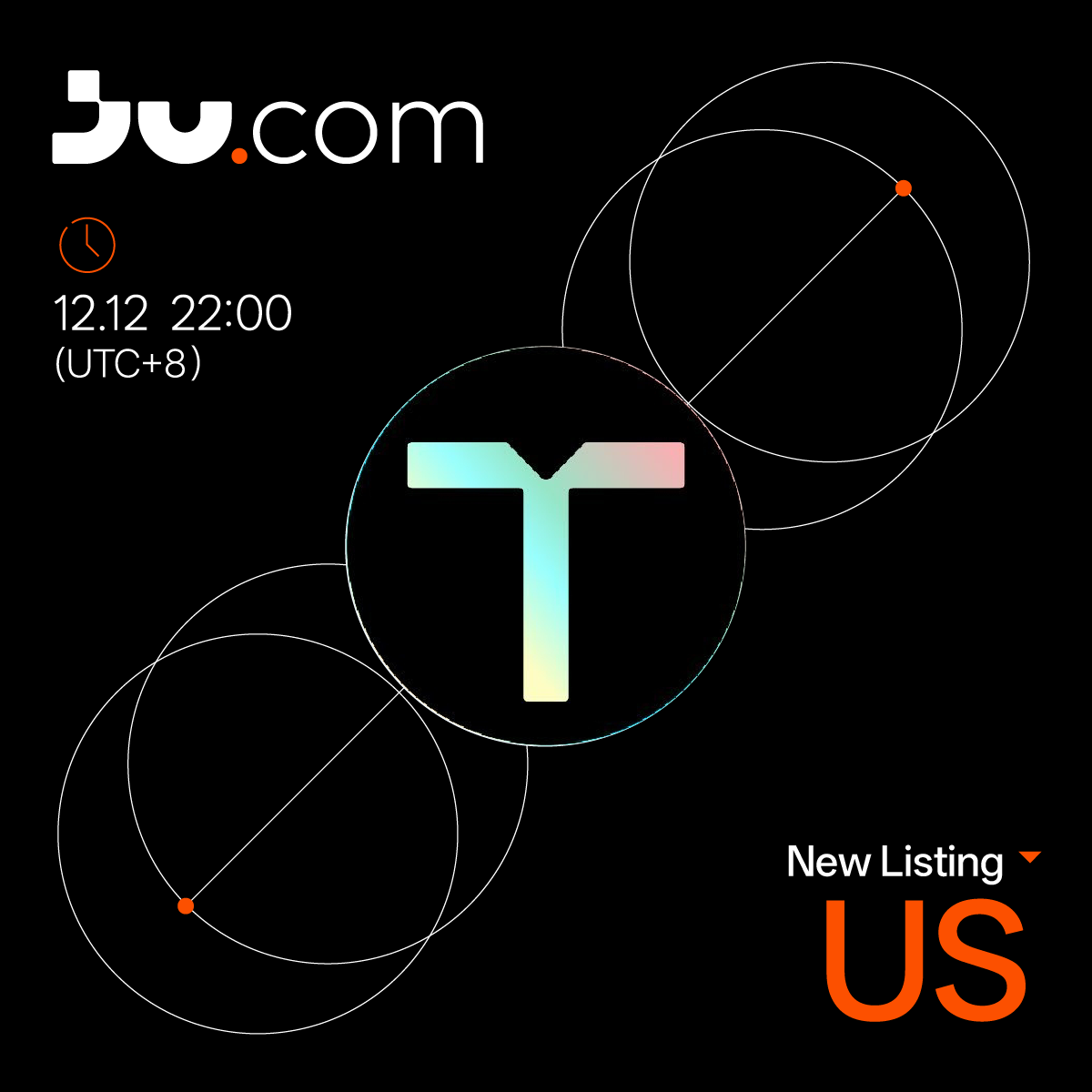
Talus Network's US token launches on Ju.com December 11, 2025, at 22:00 (UTC+8) with US/USDT trading pair. This is the first utility token powering complete on-chain decentralized AI Agent infrastructure, backed by over $10M in strategic investments.
💰 Key Highlights:
100 billion US token supply built on Sui Network with zero-inflation + burn mechanism tokenomics. US token enables AI Agent workflow execution payments, staking, tool registration, and protocol governance across the Talus ecosystem.
🎯 Technical Innovation:
Nexus Protocol is Talus's core technical framework, achieving fully on-chain AI Agent workflow execution for the first time, making every decision and action auditable and verifiable. Built on Sui's high-performance blockchain with Walrus decentralized storage, ensuring transparent and tamper-proof Agent behavior.
🎮 Use Cases:
Flagship product Idol.fun will launch Agent vs Agent (AvA) gaming mechanics where AI Agents compete in social scenarios and users predict outcomes. All match records are permanently stored on-chain, creating fully transparent prediction markets. Testnet has processed thousands of AI workflows, validating technical feasibility.
💎 Strategic Backing:
Secured over $10M in strategic investments led by Polychain Capital ($150M valuation), with Sui Foundation, Walrus Foundation, Foresight Ventures, Animoca Brands, and Polygon co-founder among backers. 48-month unlock schedule prevents early selling pressure.
🔧 Zero-Code Tools:
Talus Vision visual builder enables users to create AI Agent workflows without coding, dramatically lowering development barriers and accelerating on-chain AI automation adoption.
Trade US token now on Ju.com and seize early opportunities in the AI × Blockchain convergence!
📖 Complete in-depth analysis: 👉 https://blog.ju.com/jucom-lists-talus-us-token/?utm_source=blog
#Talus #US #AI #Blockchain #Jucom